Social Surveillance: Smarter Way to Report Crime
What if reporting a crime was as easy as sending a Snap? Social surveillance lets citizens record, send, and help police act faster—quietly and safely.
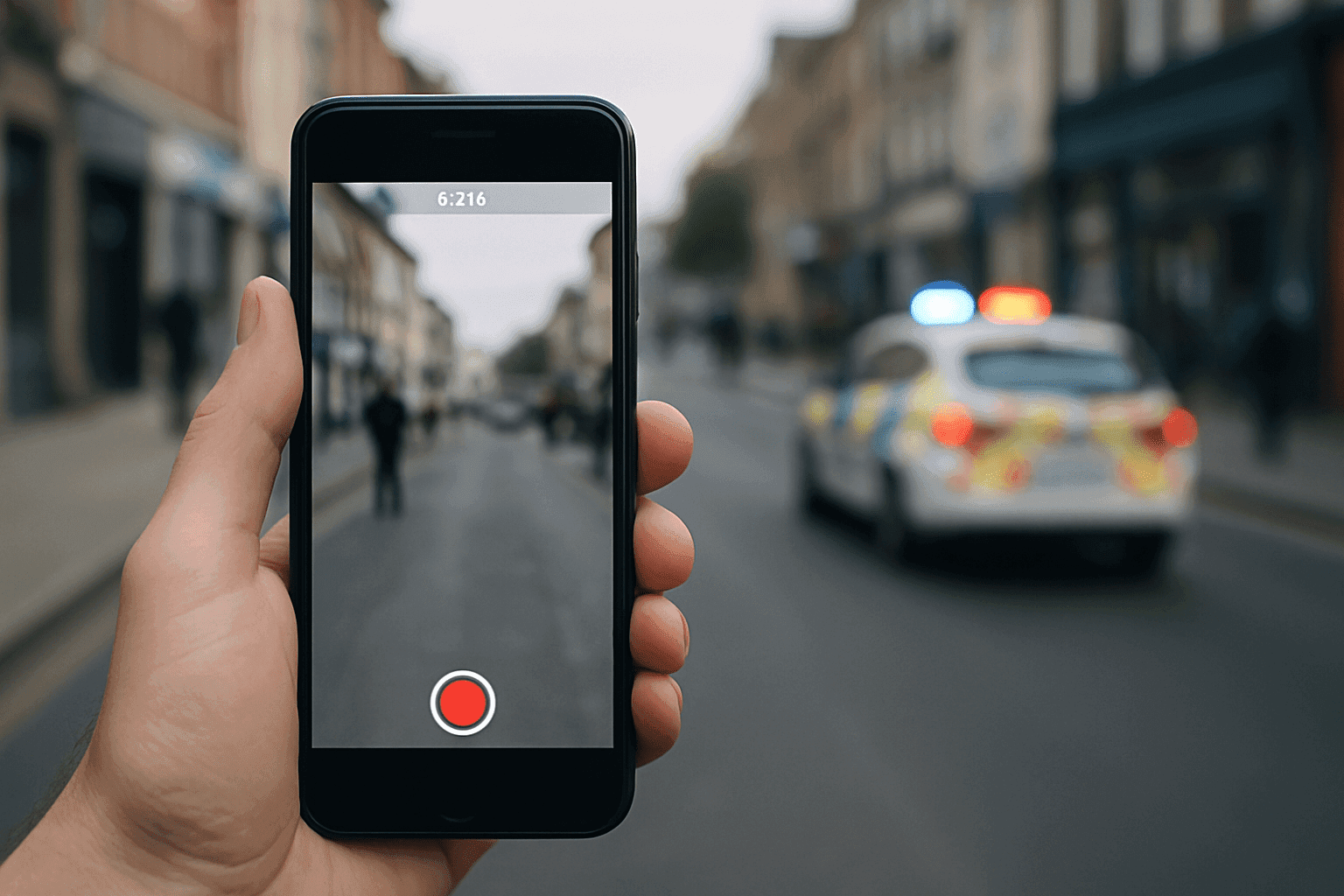
An idea that keeps resurfacing in my mind every time I see news about crime, bad roads, or unsafe public places.
Every time something goes wrong, we immediately demand more CCTV cameras, more police presence, and more government surveillance.
But does that really fix the problem?
I don't think so.
I actually think there's a more intelligent, socially motivated approach.
Not harsher surveillance, but rather improved participation.
Let me ask you something.
Have you ever witnessed a crime or seen something wrong being done and not said anything because you didn’t want any trouble?
I have, and I think most people have too.
It's not that people don't care.
It's that getting involved feels risky.
No one wants to fight a bully or go to court as a witness.
This silence becomes a shield for criminals.
They assume that no one will report them.
They believe the witnesses won't say anything.
What if instead of government surveillance, we built social surveillance?
Not spying, not forcing, but simple, safe, voluntary reporting.
A system where the government trusts citizens rather than cameras on poles.
And the tool already exists.
It's in your pocket right now.
Your phone's camera.
Here is how it works in my imagination:
You witness someone being robbed, beaten, harassed, or otherwise publicly breaking the law.
You furtively record a video or audio on your phone.
But-and this is important-the recording does NOT auto-send to the police.
Nothing leaves your phone unless you choose to send it.
You tap a button, just like sending a Snap or WhatsApp message.
The moment you send it, AI takes over.
It analyzes the clip, detecting what is happening.
It reads sounds, actions, objects, and the environment.
It then checks the geotag to confirm the location.
If it identifies a potential crime, it contacts the nearest team of police officers.
The police receive context: location, time, and a preview of the recording.
Now here's the part I like the most.
Police still make the decision.
Technology does not replace human judgment.
If they think it's a genuine crime, they take immediate action.
If they don't think it is a crime, they need to write a short explanation.
Nothing complicated-just one sentence.
For instance,
"It's not a crime to water public trees."
“It’s not a crime to feed dogs.”
“It’s not a crime to play with your dog in public parking.”
This keeps power balanced.
Police do not get overwhelmed with false alarms.
Citizens do not feel ignored or belittled.
What if the police ignore a real crime?
Then the report goes into an accountability system.
Not to punish but to improve and make things more transparent.
So, instead of blaming the whole system,
Now we have something to learn, improve, and do better next time.
Accountability becomes automatic, not emotional.
And just to be crystal clear,
It does not replace emergency numbers like 100 or 911.
If someone's life is in danger, you still call immediately.
This system is for passive contribution.
For when you don’t want to get physically involved.
For moments when recording is safer than speaking.
For example, let's consider:
You see a drunk driver swerving on the road.
You don't chase them; you just record and send.
Someone throws rubbish into a river.
Or someone vandalizes public property.
Or perhaps a streetlight has been broken for weeks.
Small acts count too.
Because tiny problems become big problems when ignored.
One major benefit is emotional safety.
You don't have to argue, confront, or risk violence.
Your identity remains private unless you decide otherwise.
Another advantage is accuracy.
Currently, police receive calls based on fear or confusion.
But video proof reduces guesswork.
AI can also filter out harmless situations.
Similar to children playing, street performers, or family disputes.
So, police pay attention to real threats, not random noise.
People also worry about privacy.
And they should.
The first concern of any such mechanism must be the protection of citizens.
So here’s how I imagine it:
It only stores videos that are sent in voluntarily.
The faces of non-criminal bystanders are automatically blurred.
The data are encrypted, and access is restricted.
No member of government can arbitrarily watch your life.
Nobody can spy on you through your camera.
Because it is a citizen-controlled system, not government-controlled.
And honestly, the technology is already there.
Phones can record, instantly compress, and send files.AI can detect violence, weapons, screams, or distress. So why isn’t this already happening? Because technology isn't the biggest challenge.
Public mindset is. People have to think reporting is normal. Not heroic, not dangerous, not burdensome. just responsible. Like wearing a seatbelt. Like voting.
Like throwing garbage into a dustbin. Think of it: a city where ordinary citizens contribute to law and safety. Not through force or fear. But through awareness and participation.
Criminals suddenly lose the greatest advantage-silence. Because nowadays, every pocket carries potential proof. Not to expose innocent people, but to protect society.
This also reduces the requirement for expensive surveillance infrastructure. Instead of installing thousands of cameras, Rather, it simply empowers the existing millions. I'm not saying this system is going to end crime altogether. Nothing ever will.
It engenders pressure, visibility, and responsibility. And more importantly, it gives power back to ordinary people. People like you and me. People who care, but do not want to be dragged into danger.
So now, I want to ask you directly. If you saw something wrong happening, if it only took one tap, would you record and send it? Would you quietly help, without drama and without risk? Would you participate if society encouraged it? I think many people would.
Because, deep within, it is fairness that most humans want. Most of us do not want to have anything to do with crime. We just want a safe way to contribute.
That's what this system provides. safety, anonymity, evidence, and speed. All packed inside a phone you already own. So tell me what you think.
Does this feel practical or unrealistic? What troubles you, and what thrills you? I really want to know your opinions. Because ideas only become movements when people talk about them. And perhaps this conversation is that first step.